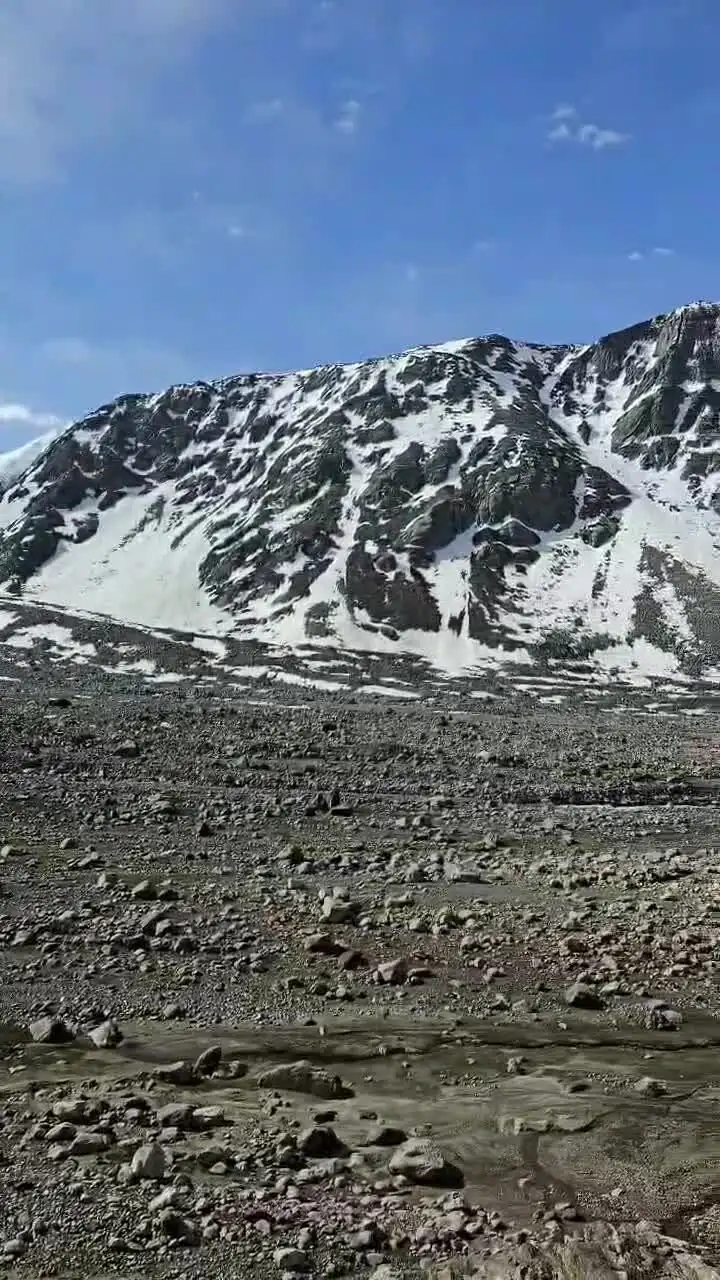
Most people don't need days of acclimatisation for Sach Pass, because you cross the 4,414 m top and sleep lower, at about 2,600 m in Killar. The night that matters is the one before: Bairagarh, at about 2,800 m, is just above the height that medical guidelines say not to sleep at on your first day up from the plains. If you get a bad headache, confusion or breathlessness on the climb, go down.
On this page

How high do you actually go, and for how long?
Here’s the height profile of a typical crossing, using the heights in our Chamba to Killar guide:
| Where | Height | How long you’re there |
|---|---|---|
| Chamba | about 1,000 m | A night, if you break the journey |
| Bairagarh | about 2,800 m | The night before the climb |
| Sach Pass | about 4,414 m | Half an hour or so at the top |
| Killar | about 2,590 m | The next night |
So you spend a few hours above 3,500 m and one night near 2,800 m. That’s very different from trekking or driving to Ladakh, where you sleep high for days.
Why does where you sleep matter more than the top?
Because altitude illness mostly comes on at night. The CDC’s guidance says hypoxaemia (low oxygen in the blood) is greatest during sleep, and that day trips to altitude with “an evening return to lower altitude are much less stressful on the body” than staying high. Symptoms usually start 2–12 hours after arriving, often during or after the first night.
A crossing works like a day trip. You go up to 4,414 m for a short time and come down to sleep at about 2,600 m in Killar, or back at Bairagarh.
Is a night in Bairagarh a problem?
It’s the night to think about. The Wilderness Medical Society, quoted by the CDC, advises against ascending to a sleeping altitude of 2,750 m (9,000 ft) or more in a single day. Bairagarh is about 2,800 m, just over that line. In the CDC’s risk table, a first night at 2,750–3,400 m puts an unacclimatised traveller in the “moderate” risk group.
In practice:
- If you come from the plains in one day (Pathankot or Delhi straight to Bairagarh), you’re sleeping at the edge of the advised limit on night one. Many people do it without trouble, but it’s the most common way to have a bad first night.
- If you break the journey with a night in Chamba (about 1,000 m) or Dalhousie, you arrive in Bairagarh rested, and the trip is gentler. How to reach Sach Pass covers the route to Chamba.
- If you’ve had altitude illness before, the CDC says your past reaction at similar heights is the best guide you have. Plan the extra night.
What are the warning signs on the way up?
From the CDC’s guidance:
- Acute mountain sickness (AMS): a headache, plus at least one of loss of appetite, dizziness, tiredness, nausea or vomiting. Mild AMS usually settles within 12–48 hours if you go no higher.
- High-altitude cerebral oedema (HACE): confusion, drowsiness, clumsiness or being unable to walk in a straight line. This is an emergency.
- High-altitude pulmonary oedema (HAPE): breathlessness at rest, a cough, chest congestion, and sometimes pink or bloody spit. This is also an emergency.
What do you do if someone feels ill at the top?
Go down. The CDC says AMS “improves rapidly with a descent of 300 m (1,000 ft) or more”, and that for HAPE, descent is urgent and mandatory. On Sach Pass, the road gives you that descent in either direction, so don’t wait at the top hoping it passes.
Remember how far help is. The nearest hospitals are the civil hospitals at Tissa and Killar. The Tribune reported in July 2024 that Killar had five of its 12 medical officer posts filled and was 177 km from the medical college in Chamba. Our post on what goes wrong on Sach Pass covers the rest.
What else helps?
- Skip alcohol for the first 48 hours up high, the CDC advises, and keep exercise light.
- Keep your usual coffee or tea. Caffeine withdrawal causes a headache you could mistake for AMS.
- Plan the day so you can turn back. A late start leaves you no time to go down slowly if someone feels unwell.
Quick answers
How high is Sach Pass?
About 4,414 m (14,482 ft), the figure most sources give. News reports also round it to 4,500 m.
Should I take Diamox (acetazolamide) for Sach Pass?
That's a question for your doctor, not us. For context, the CDC Yellow Book describes a preventive dose of 125 mg every 12 hours, starting the day before ascent. Most people crossing Sach Pass in a day don't need it, but someone with past altitude illness might.
Can children and older people cross Sach Pass?
Many do, because the time spent high is short. Children may not be able to say they feel unwell, so watch for unusual tiredness or vomiting. Anyone with heart or lung disease should ask their doctor first.
Does being fit protect you from altitude sickness?
No. The CDC Yellow Book says training and physical fitness do not affect the risk. How you have reacted at similar heights before is a better guide.
Sources
- High-Altitude Travel and Altitude Illness, CDC Yellow Book 2026 (Hackett and Shlim) (opens in a new tab)
- Saach Pass, Wikipedia (height and coordinates) (opens in a new tab)
- Pangi valley’s crippled healthcare services in need of major overhaul, The Tribune (5 July 2024) (opens in a new tab)
- One killed, 6 hurt as boulders fall on HRTC bus near Sach Pass (Tissa Civil Hospital), The Tribune (26 June 2022) (opens in a new tab)


