Part of the Sach Pass complete guide · Tags: #season #weather #planning
At the top of Sach Pass (4,414 m), even the warmest months, July and August, average only about 9°C in the afternoon and 2–3°C at night. From October the days stay below about 1°C and the nights fall to −7°C and lower, and from November to April it averages below freezing all day. Down in Bairagarh, 30 km below, summer days are about 18°C. The figures below are ten-year averages from a weather model, so treat them as a guide to what to pack, not a forecast.
On this page

How cold is Sach Pass, month by month?
Average afternoon high and night-time low, in °C, at the top and in Bairagarh, where most people sleep before crossing:
| Month | Top of the pass, 4,414 m | Bairagarh, about 2,800 m |
|---|---|---|
| January | −11 by day, −18 at night | 1 by day, −11 at night |
| February | −10 / −17 | 3 / −10 |
| March | −6 / −13 | 7 / −6 |
| April | −2 / −9 | 12 / −1 |
| May | 2 / −6 | 16 / 3 |
| June | 7 / −1 | 18 / 7 |
| July | 9 / 3 | 18 / 11 |
| August | 9 / 2 | 18 / 11 |
| September | 7 / −1 | 17 / 7 |
| October | 1 / −7 | 13 / 1 |
| November | −4 / −11 | 9 / −4 |
| December | −8 / −16 | 5 / −9 |
Two things stand out. The top is 9–12°C colder than Bairagarh all year, so a T-shirt morning in the village can be a jacket-and-gloves stop at the shrine two hours later. And the open season is short: only from June to September does the top average above freezing in the afternoon.
Latest report (14 November 2026): Closed. Nearly two feet of snow shut the road over the top on 14 November. Bairagarh and Chamba stays stay open.
Source: Himachal's remote Pangi valley cut off as Sach Pass shuts, The Tribune (14 November 2026) (opens in a new tab). Last checked 20 November 2026. Usually open: Late May or June until snow shuts it, from mid-October. The dates move every year. Today's status, in full.
When does it snow, and when does it rain?
Fresh snow and total rain or snow at the top, in an average month:
| Month | Fresh snow at the top | Rain and snow, as water |
|---|---|---|
| May | About 47 cm | About 100 mm |
| June | About 10 cm | About 140 mm |
| July | A few cm | About 240 mm, the wettest month |
| August | Almost none | About 220 mm |
| September | About 10 cm | About 115 mm |
| October | About 28 cm | About 50 mm |
| November–April | 45–120 cm a month | 70–170 mm a month |
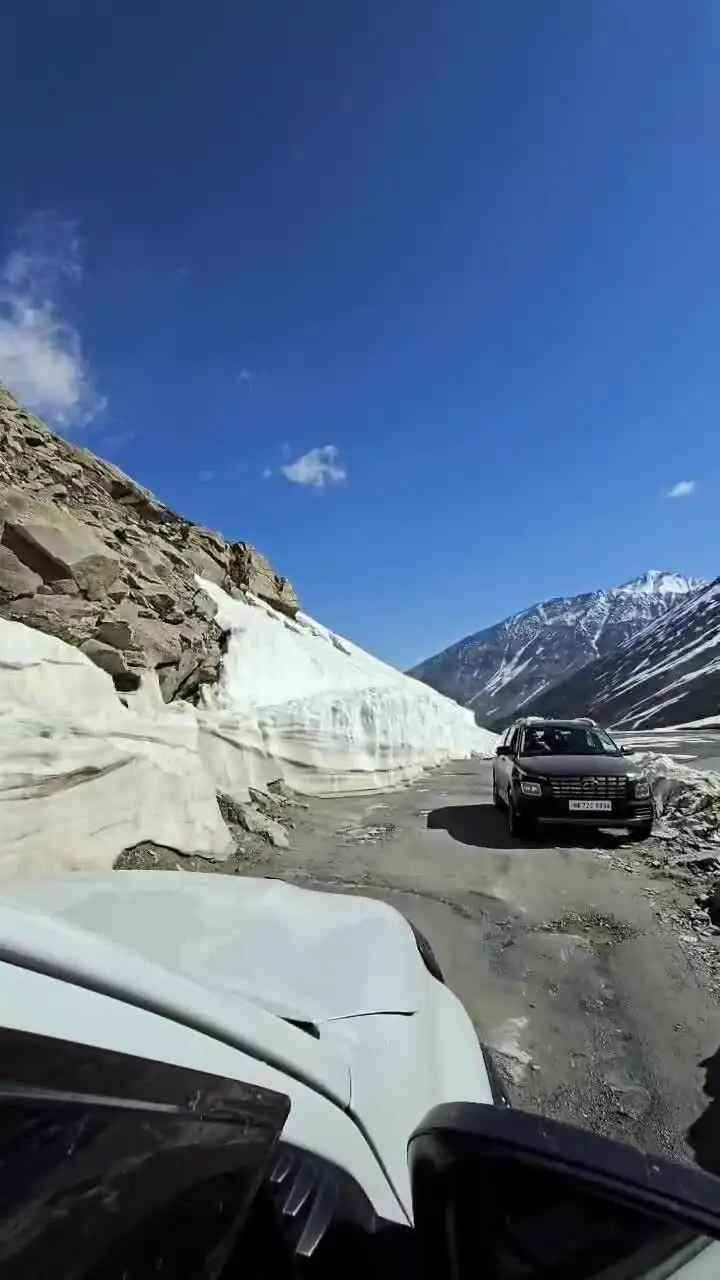
The pattern explains the road. Winter piles up metres of snow, which the PWD cuts through in May and June: that’s where the snow walls come from. The monsoon then brings the heaviest rain of the year in July and August, when loose rock and swollen streams cause most of the trouble. September is drier and the snow is gone from the road, which is why it’s the month we suggest most often in our month-by-month guide.
October is the turn. It’s one of the driest months, but the nights at the top average −7°C, so what does fall comes as snow. In 2026 about a foot fell on 15 October and nearly two feet on the night of 13 November, and each time the road shut.
What the numbers mean for your trip
- Pack for winter at the top, even in July. A warm jacket, a hat and gloves weigh little, and you’ll stop at the shrine longer than you think. Riders need waterproofs over their gear: afternoon cloud often brings rain or sleet.
- Start early. Afternoons bring cloud, wind and, in summer, rain. The streams across the road are fed by snowmelt and rise as the day warms. Over the top by late morning is the rule.
- Nights at Satrundi are cold. At about 3,400 m the camps sit between Bairagarh and the top in temperature: plan on nights close to freezing outside July and August, and a proper sleeping layer.
- Check the forecast for the pass, not for Chamba. Chamba is about 3,400 m lower, so its forecast tells you little about the top. A mountain forecast for the pass’s position, then the road status, is the right order.

Killar, on the far side
Killar, at about 2,590 m in Pangi, is a little warmer than Bairagarh in summer, with July and August afternoons around 22°C and nights about 12°C. Its winter is long: from December to February the average afternoon is around 0–3°C, and Pangi is cut off by road for much of it. More on how the valley copes in Sach Pass in winter.
Trips that fit this post
All Sach Pass packagesSach Pass Camping & Stargazing
A night in Bairagarh to adjust, then a seasonal camp near Satrundi, about 3,400 m up, for dark skies, and the top of the pass at sunrise.
- Camping
- Short trip
Sach Pass Motorcycle Expedition
Ride Chamba to Killar and back over the pass, with a night at the foot of the climb before each crossing, a back-up vehicle and a spare day in Pangi.
- Bike


Quick answers
What is the temperature at Sach Pass in July?
At the top, about 9°C on an average afternoon and about 3°C at night. Wind and cloud make it feel colder. In Bairagarh, at the foot of the climb, July afternoons average about 18°C.
In which months does it snow at Sach Pass?
Fresh snow is likely in every month from October to June. July and August usually see little or none, though old snow stays on the slopes. September can bring the first light falls, and by mid-October one heavy fall can shut the road.
Is it below freezing at the top in summer?
At night, often in June and September: on roughly two nights in three in those months the top drops below 0°C. In July and August it does on only a couple of nights a month.
When does it rain most at Sach Pass?
July and August, with the monsoon: they are the wettest months of the year at the pass. That rain is what brings the landslides and the sudden closures in late summer.
Where can I check the forecast for Sach Pass?
Use a mountain forecast for the pass itself rather than for Chamba town, which is 3,400 m lower. Then check our road status page, which carries the latest official report on the road.
Sources
- Historical weather for 33.006 N, 76.240 E at 4,414 m, and for Bairagarh and Killar, 2016–2025 (ERA5 reanalysis), Open-Meteo (opens in a new tab)
- Himachal’s remote Pangi valley cut off as Sach Pass shuts (nearly two feet of snow, 14 November 2026), The Tribune (opens in a new tab)
- Sach Pass road reopens after 2-day closure (snow on 15 October 2026), The Tribune (opens in a new tab)
- Sach Pass in July: itinerary and road conditions (about 5–15°C by day at the top), Discover with Dheeraj (updated 2026) (opens in a new tab)
- Saach Pass (4,414 m, Pir Panjal), Wikipedia (opens in a new tab)


